
Hero Story - News
News

Despite Rising Costs, Consumers Still Value Travel
According to the latest Longwoods International tracking study of American travelers, 75% of them believe travel is becoming too expensive, up from 64% a year ago. But even with rising cost concerns, ...
Read More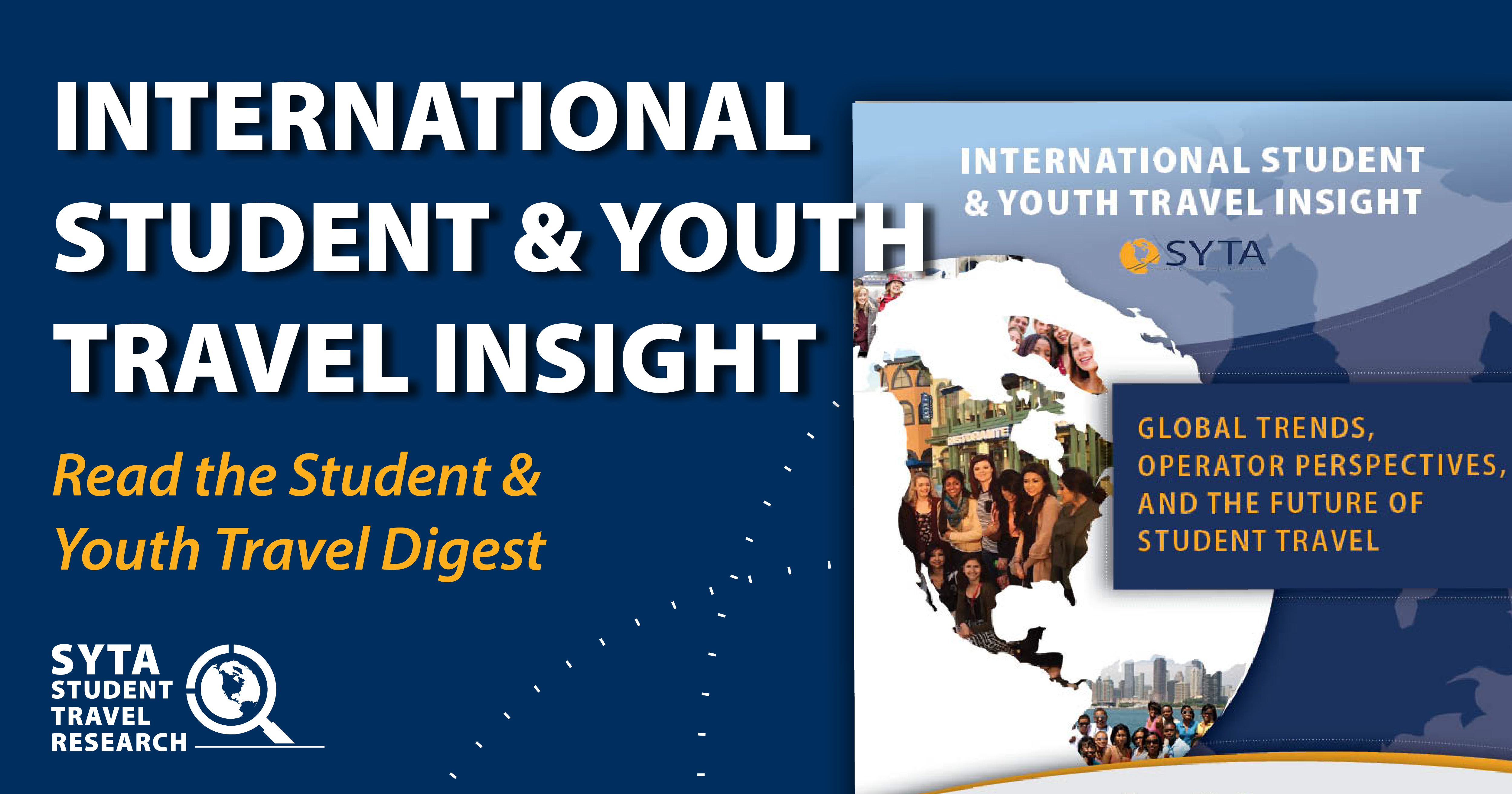
New Insight: Global Trends, Operator Perspectives, and the Future of International Student Travel
New research, conducted by BONARD Education on behalf of the Student & Youth Travel Association, is shedding light on the future of international student and youth travel from the perspective of tour operators and travel providers specializing in the sector.
Not only has international student travel evolved, it has matured from what it once was. And many factors are shaping exactly how decisions related to planning a student trip today are being made. To better understand how the sector is evolving, SYTA commissioned BONARD to gather qualitative insights from international tour operators and travel providers specializing in student group travel.
Keep reading from some key findings, from changes in decision-making and destination preferences to elevated operations, and more.
-
Demand is stable—but more selective, with cost being the primary decision driver: The post-pandemic surge has leveled off into predictable growth, with schools and families making more intentional, value-driven decisions. Rising prices are also reshaping trip frequency, duration, and destination choice, with some schools moving to biennial travel cycles.
-
Destination preferences are shifting: Softening demand for the U.S. in some markets, growth in Asia for academically aligned programs (STEM, etc.), increased interest in Africa and South America for experiential travel, and a greater use of secondary cities and alternative routes in Europe.
-
Safety and accountability expectations have intensified, and decision-making is more complex: Schools and parents require detailed risk assessments, transparency, and strong communication before committing. More stakeholders are also now involved (parents, administrators, risk/compliance teams), leading to longer planning and approval timelines.
-
Student travel is becoming more purpose-driven, with experiential learning replacing passive sightseeing: Programs are expected to deliver measurable educational outcomes and support personal development (resilience, independence, global awareness). In addition, demand is growing for immersive, hands-on, and culturally engaging activities.
-
Operational complexity and professionalized processes are increasing: Operators must manage cost volatility, administrative burden, and long planning cycles while maintaining flexibility. They’re also investing in systems, standardization, and long-term school partnerships to meet higher expectations.
-
Geopolitics and perception matter more than ever: Even indirect or perceived risks can influence destination demand and program viability.
Ultimately, despite challenges within the industry, the overall outlook remains positive. Research found that demand is resilient and opportunities exist for operators who can step beyond their comfort zones to innovate and adapt to meet the moment.
View the full report by visiting syta.org.
Courtesy of Groups Today.

© 2026 Groups Today - All Rights Reserved. Read our Terms and Conditions